Author: Kim M Reynolds
-
Ann H Kay: Oral Histories of Surveillance
And so we see this, and then we have our period apps giving off information to companies like Facebook who send it to different companies and governments. [They] are able to use all this information without our consent to regulate our bodies, how much contraceptives we should have, etc. Instead of actually protecting us considering…
-
Thami Nkosi: Oral Histories of Surveillance
And the complexities then therefore with this work is to be able to draw those parallels and simplify them for people to understand, to say the fact that you can’t go to Tokai, for example, without somebody sitting in some control room, and watching your movement is the similar thing as having to have pass…
-
Tranae’ Moran: Oral Histories of Surveillance
[O]ur message could have been co-opted multiple times by different people. We had to be clear that we are completely against biometric collecting software in residential properties anywhere in this city, not just here, and not just facial. Wwe have to figure out what’s the best way to describe this thing in every form. Because…
-
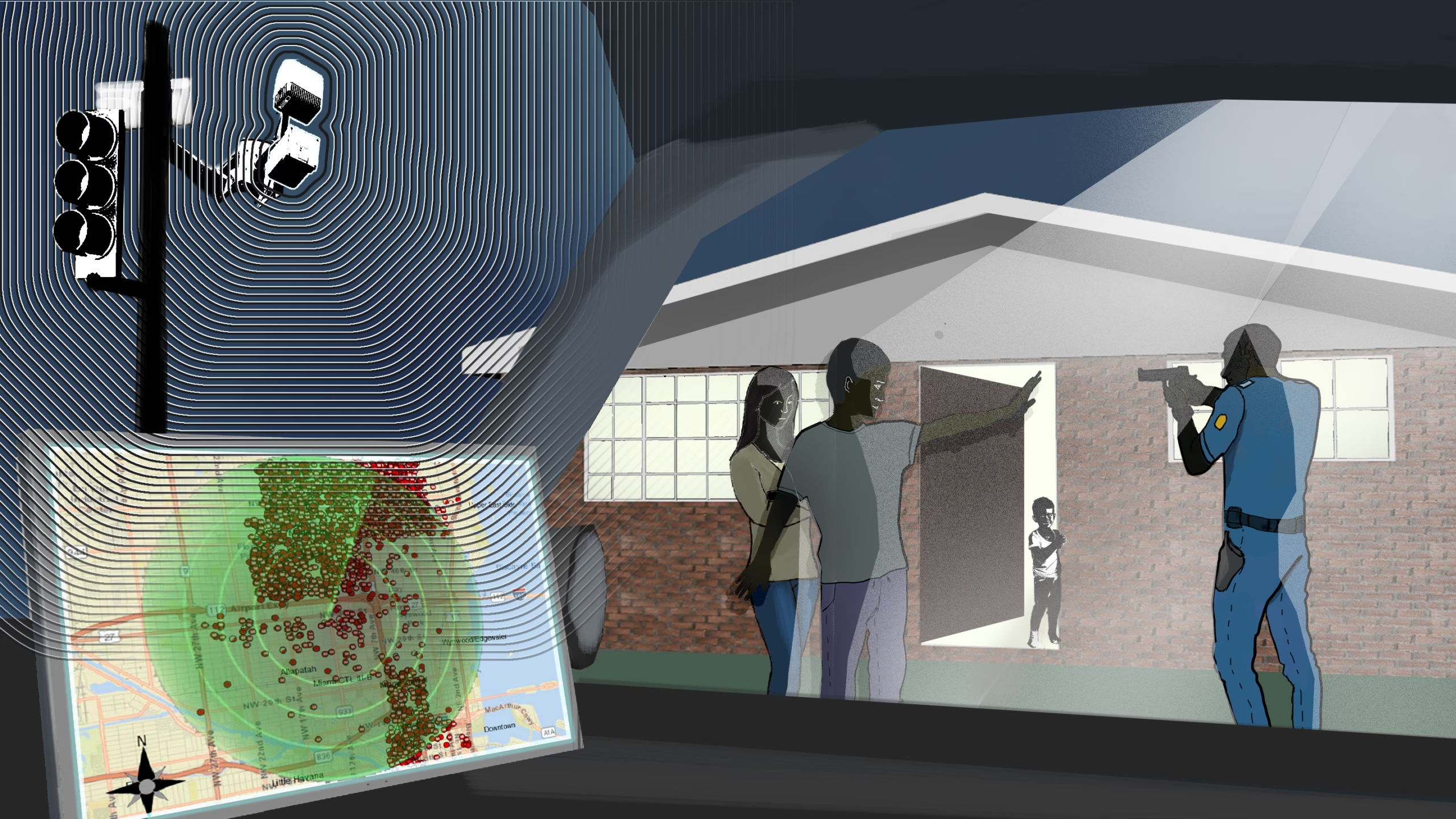
Gunshot detection technology and the reproduction of targeting Black, immigrant, and working class communities
[Original illustration and credit for Coda Story: Aigerim Ismagulova] Police stations across the United States increasingly rely on gunshot detection technology, extolling its virtues under the guise of increased safety and quicker, more predictive responses to “crime.” However, in-depth investigation reveals this technology functions as an add-on to police surveillance systems that egregiously target those…
-
Rashida Richardson: Oral Histories of Surveillance
I find the privacy frame as an approach to only challenging intrusions by technology has also help put us in this position where we don’t have laws that actually grapple with the diversity of the people in our society and how technology affects them differently. —Rashida Richardson Our Data Bodies (ODB) is excited to present…
-
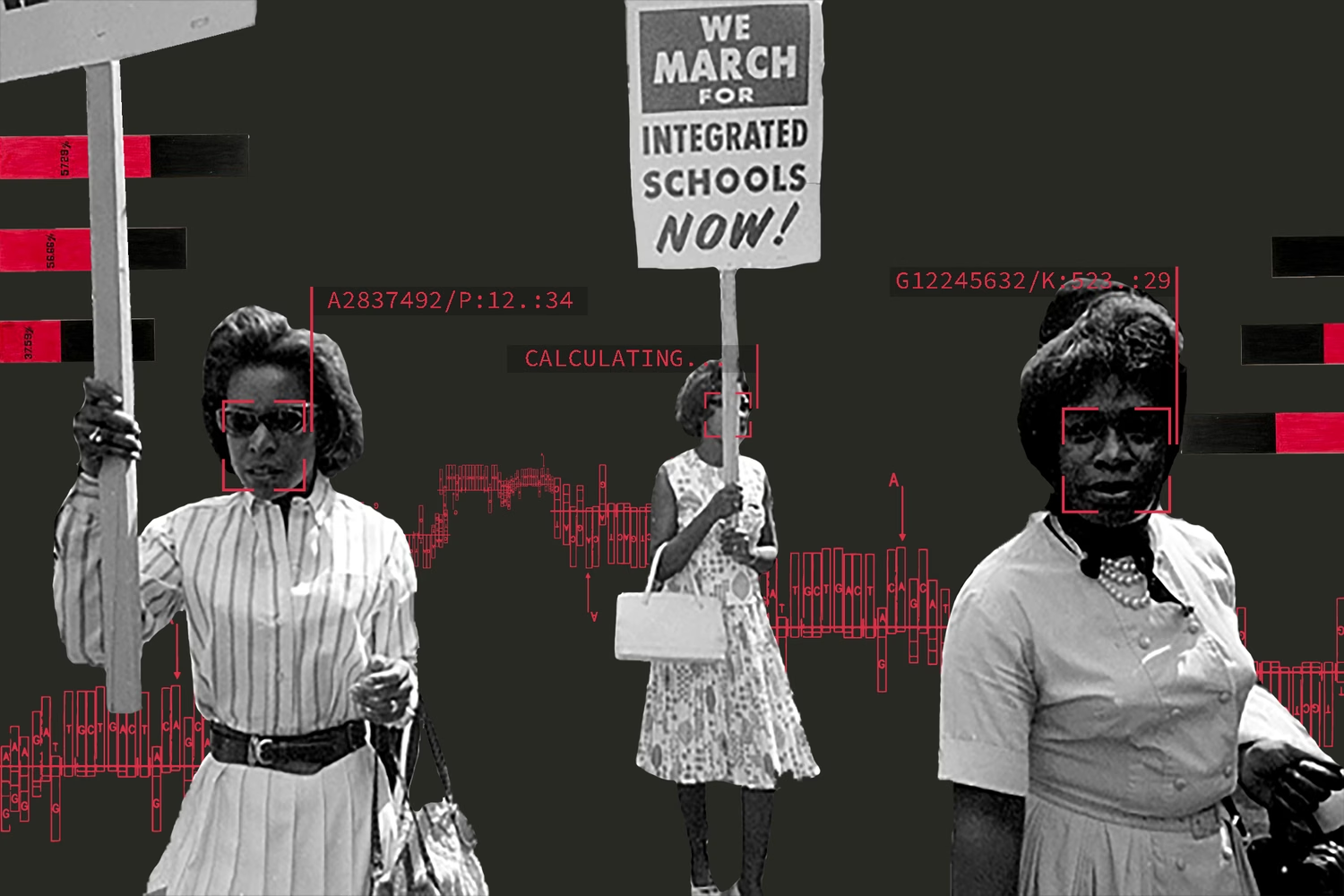
Race, tech, and medicine: Remarks from Dr. Dorothy Roberts and Dr. Ruha Benjamin
Image Credit: Ruha Benjamin (website) This past July, Dr. Dorothy Roberts and Dr. Ruha Benjamin participated in Policing without the police: Race, Technology, and the New Jim Code, an online talk facilitated by Haymarket Books. The two scholars spoke about their work and the current moment of racial justice uprisings, which fit into a…
-
Timnit Gebru: Oral Histories of Surveillance
This field is pretty terrible you know [laughs]. It’s the combination of people thinking they’re so smart and objective, and that combination just really gets to me, like, it’s this combination. Regressive is the right word. —Timnit Gebru Our Data Bodies (ODB) is excited to present a series of oral histories from organizers, writers, and…
-

J. Khadijah Abdurahman: Predictive analytics, Child Welfare, and Storytelling’s Power (Part 2 of 2)
[Cover photo credit: Mir Suhail ] Can you tell me about the oral history project at Roosevelt island- how it got started, what are the desired outcomes? So in response to all kinds like a racist debate on an online parent network, I did a public screening of Jordan Peele’s Get Out, which was really…
-

J. Khadijah Abdurahman: Predictive analytics, Child Welfare, and Storytelling’s Power (Part 1 of 2)
[Cover photo credit of J. Khadijah Abdurahman by Nkozi Tiewul found on @/ Webeimagining ] J. Khadijah Abdurahman shares her personal experiences with Administration of Children Services (ACS) in New York City and the critical work she does around archiving our own stories around power and systems. Too much of the literature about how certain…
-

Vehicles of Surveillance: Detroit’s Project Green Light
In 2019, the city of Detroit caught the national spotlight with its efforts to resist facial recognition technology (FRT). The implementation of this technology was through an initiative called Project Green Light, a public-private partnership led by the Detroit Police Department. The project seeks to present itself as means of making communities safer. But as…